United Airlines Flight UA82 Emergency: A Complete Timeline and Analysis

 🔥 Trending News
United airlines flight ua82 emergency
The United Airlines Flight UA82 emergency became one of the most closely tracked aviation incidents of July 2025, drawing attention from flight trackers, aviation journalists, and passengers alike. What began as a routine long-haul departure from Newark Liberty International Airport (EWR) bound for Indira Gandhi International Airport (DEL) in New Delhi turned into a tense, closely monitored return flight after the crew declared an in-flight emergency. This article walks through everything currently known about the United Airlines Flight UA82 emergency, including the aircraft involved, the sequence of events, the technical cause, the passenger experience, and the broader lessons the incident offers about how modern airlines handle in-flight system failures.
Overview of the United Airlines Flight UA82 Emergency
The United Airlines Flight UA82 emergency unfolded on the Newark-to-Delhi route, one of United’s flagship ultra-long-haul services connecting the New York metropolitan area to India. Flight UA82 departed Newark at approximately 21:21 EDT, embarking on what was scheduled to be roughly a 14-hour transoceanic journey. Around an hour into the flight, while the aircraft was climbing through cruising altitude near 33,000 feet (FL330), the flight crew made the decision to discontinue the climb and declare an emergency. This moment marked the start of the United Airlines Flight UA82 emergency as it would later be reported across aviation news outlets and social media flight-tracking communities.
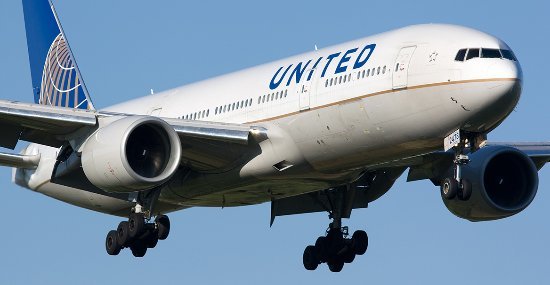
The aircraft operating the flight was a Boeing 787-9 Dreamliner, registered N23983, an approximately 4.8-year-old widebody jet that had been in continuous service with United Airlines since its delivery. Wide-body aircraft like the 787-9 are built specifically for long-haul, overwater routes such as Newark–Delhi, which makes any onboard system failure during the transatlantic or transcontinental legs of the journey particularly significant. The United Airlines Flight UA82 emergency is a reminder of how even highly reliable modern aircraft can experience unexpected technical faults mid-flight.
How the United Airlines Flight UA82 Emergency Began
According to flight-tracking data and pilot communications reviewed by aviation observers, the United Airlines Flight UA82 emergency began when the flight crew detected a fault in the aircraft’s electronics cooling system. This system is responsible for regulating the temperature of critical onboard avionics and electronic components, which is especially important on long-haul aircraft that rely heavily on continuous electronic monitoring, navigation, and communication systems throughout extended overwater flight segments.
Roughly 45 minutes into the flight, as the Boeing 787-9 approached its assigned cruising altitude, the crew squawked the transponder code 7700, the internationally recognized signal that alerts air traffic control to a general emergency aboard an aircraft. The squawk 7700 code triggered priority handling from air traffic controllers, who cleared airspace and coordinated the aircraft’s return path. This is a standard and well-rehearsed procedure, and its use during the United Airlines Flight UA82 emergency demonstrated the crew following established protocols rather than improvising under pressure.
Flight-tracking services showed the aircraft discontinuing its climb and executing a U-turn over the Gulf of Maine, an area over the North Atlantic often used by transatlantic flights departing the U.S. East Coast. This turnaround point became a key data marker for aviation enthusiasts following the United Airlines Flight UA82 emergency in real time through publicly available flight-tracking platforms.
The Technical Cause Behind the United Airlines Flight UA82 Emergency
The root cause identified for the United Airlines Flight UA82 emergency was a failure within the aircraft’s electronics cooling system. On the Boeing 787-9, this cooling infrastructure plays a vital role in preventing the overheating of essential avionics, including systems tied to navigation, communication, and flight management. A malfunction in this cooling architecture is treated seriously by flight crews because unchecked overheating could, in a worst-case scenario, compromise the reliability of instruments the crew depends on for safe long-haul operation, particularly over remote oceanic airspace where diversion options are limited.
Because Flight UA82 was still relatively close to the North American coastline when the fault was detected, the crew had the advantage of nearby diversion airports, including the option to return directly to Newark. This proximity to suitable airports factored heavily into the decision-making process during the United Airlines Flight UA82 emergency, allowing the pilots to choose a direct return rather than pressing forward into the remote overwater segment of the Newark–Delhi routing, where support options would have been far more limited.
Aviation safety protocols call for crews to treat any cooling or thermal-management fault conservatively, especially before committing to hours of flight over open ocean. The decision to turn back during the United Airlines Flight UA82 emergency reflects this conservative, safety-first approach that is standard across the airline industry, particularly for ETOPS (Extended Operations) certified long-haul routes like Newark–Delhi.
Return to Newark: Tracking the United Airlines Flight UA82 Emergency Minute by Minute
Flight-tracking data compiled by aviation news outlets provides a detailed minute-by-minute account of the United Airlines Flight UA82 emergency as the aircraft made its way back to Newark. After squawking 7700 near 02:15 UTC, the crew began a direct track back toward the departure airport. By roughly 02:40 UTC, the aircraft was already descending through flight level 180, maintaining its emergency squawk code to preserve priority handling from air traffic control throughout the return leg of the United Airlines Flight UA82 emergency.
The aircraft continued its approach, reaching the 03:00 UTC mark while lined up for arrival into Newark Liberty International Airport. Final approach was reported at approximately 03:12 UTC, with touchdown following shortly after at 03:15 UTC. In total, the United Airlines Flight UA82 emergency resulted in the aircraft landing back in Newark almost exactly two hours after its original departure, having briefly ventured out over the Gulf of Maine before reversing course. The Boeing 787-9 touched down safely on runway 22L, and emergency response vehicles were reportedly positioned near the runway as a precautionary measure, which is standard practice whenever an aircraft declares an emergency, even when no injuries or structural damage are expected.
Passenger Experience During the United Airlines Flight UA82 Emergency
For the passengers and crew aboard, the United Airlines Flight UA82 emergency likely felt far more dramatic in the moment than the technical explanation might suggest. Passengers who had just settled in for an overnight, roughly 14-hour flight to New Delhi instead found themselves making an unplanned U-turn over the Atlantic, descending back toward Newark under emergency protocol. Online discussions and passenger accounts that circulated in the aftermath of the United Airlines Flight UA82 emergency described a tense but ultimately orderly experience, with the flight crew keeping the cabin informed as the aircraft made its way back to the airport.
Importantly, no injuries were reported among passengers or crew during the United Airlines Flight UA82 emergency. The aircraft landed without incident, and passengers were deplaned normally once the aircraft reached the gate. United Airlines subsequently issued a statement affirming that safety remained the airline’s top priority and commending the flight crew’s professionalism throughout the United Airlines Flight UA82 emergency. This kind of public acknowledgment is common after in-flight emergencies, both to reassure the flying public and to recognize crew members who executed emergency procedures correctly under pressure.
United Airlines’ Response to the Flight UA82 Emergency
Following the United Airlines Flight UA82 emergency, the airline moved quickly to manage the practical fallout for displaced passengers. According to reports, United Airlines arranged alternative travel accommodations for those affected, including meal vouchers, hotel stays for passengers who needed overnight lodging in the New York area, and rebooking onto the next available flights to New Delhi. This kind of rapid rebooking response is a standard part of how U.S. carriers handle irregular operations stemming from safety-related turnbacks like the United Airlines Flight UA82 emergency.
The Boeing 787-9 involved in the United Airlines Flight UA82 emergency, registration N23983, was taken out of service following the return to Newark. Maintenance teams conducted a technical inspection of the aircraft to identify and resolve the underlying cooling system fault before the jet was cleared to fly passengers again. Pulling an aircraft from service for inspection after any emergency squawk is a routine but essential step, ensuring that whatever triggered the United Airlines Flight UA82 emergency is fully understood and corrected rather than risking a repeat occurrence on a subsequent flight.
Why the United Airlines Flight UA82 Emergency Drew So Much Attention
Incidents like the United Airlines Flight UA82 emergency tend to generate significant public interest for several reasons. First, the use of a squawk 7700 emergency code is relatively rare and immediately visible to anyone using publicly available flight-tracking tools, which meant aviation enthusiasts were monitoring the situation in near real time as it developed. Second, long-haul international routes such as Newark–Delhi capture attention because of the sheer distance and duration involved; an emergency turnback on a flight expected to last 14 hours carries a different weight than a similar issue on a short domestic hop.
Third, the United Airlines Flight UA82 emergency involved a widely flown aircraft type, the Boeing 787-9 Dreamliner, which is central to many airlines’ long-haul fleets. Any reported technical fault on this aircraft type, even one resolved safely and without incident, tends to draw scrutiny from industry analysts and frequent flyers who rely on the 787 family for international travel. Discussions across aviation forums following the United Airlines Flight UA82 emergency included passengers and enthusiasts speculating about the cause before official details about the cooling system fault were confirmed, illustrating how quickly information, and sometimes misinformation, can spread in the immediate aftermath of an in-flight emergency.
Lessons From the United Airlines Flight UA82 Emergency
The United Airlines Flight UA82 emergency offers a useful case study in how commercial aviation safety systems are designed to work. From the moment the crew detected the cooling system fault, every subsequent step, discontinuing the climb, squawking 7700, coordinating with air traffic control, and executing a direct return to the nearest suitable airport, followed established emergency procedures that pilots train for extensively. The successful, injury-free outcome of the United Airlines Flight UA82 emergency reflects the effectiveness of these layered safety protocols rather than any failure of the system.
The incident also highlights the importance of proximity to diversion airports on long-haul overwater routes. Because the United Airlines Flight UA82 emergency occurred relatively early in the flight, while the aircraft was still within reach of its departure airport, the crew had a straightforward and low-risk option available. Had the same cooling system fault developed later in the flight, well into the transatlantic overwater segment, the decision-making calculus would have been considerably more complex, potentially requiring a diversion to an alternate airport in Europe or elsewhere along the route.
Finally, the United Airlines Flight UA82 emergency underscores how airlines manage the operational aftermath of a safety event. Rebooking hundreds of passengers on a long-haul international route, especially one operating on limited daily frequency, is logistically demanding. United’s ability to offer meal vouchers, hotel accommodations, and rebooking on subsequent flights reflects the contingency planning that major carriers maintain for exactly this type of disruption.
Frequently Asked Questions About the United Airlines Flight UA82 Emergency
What caused the United Airlines Flight UA82 emergency? The United Airlines Flight UA82 emergency was triggered by a failure in the Boeing 787-9’s electronics cooling system, a fault detected by the flight crew shortly after the aircraft reached cruising altitude.
Were there any injuries during the United Airlines Flight UA82 emergency? No injuries were reported among passengers or crew. The United Airlines Flight UA82 emergency concluded with a safe landing back at Newark Liberty International Airport.
How long did the United Airlines Flight UA82 emergency last? From departure to the aircraft’s return landing at Newark, the United Airlines Flight UA82 emergency spanned approximately two hours, including the outbound climb, the turnback over the Gulf of Maine, and the descent and approach back into EWR.
What aircraft was involved in the United Airlines Flight UA82 emergency? The United Airlines Flight UA82 emergency involved a Boeing 787-9 Dreamliner, registration N23983, which was subsequently taken out of service for technical inspection following the incident.
Did passengers eventually reach New Delhi after the United Airlines Flight UA82 emergency? Yes. United Airlines rebooked affected passengers on subsequent flights to New Delhi and provided meal vouchers and hotel accommodations as needed following the United Airlines Flight UA82 emergency.
Final Thoughts on the United Airlines Flight UA82 Emergency
The United Airlines Flight UA82 emergency ultimately stands as an example of commercial aviation safety systems functioning as intended. A technical fault was detected early, standard emergency procedures were followed precisely, air traffic control provided priority handling, and the aircraft returned safely without any injuries to those on board. While the United Airlines Flight UA82 emergency disrupted travel plans for passengers bound for New Delhi and required the airline to manage a complex rebooking effort, the incident did not result in any lasting harm and served as a real-world demonstration of how modern long-haul aircraft and their crews are prepared to handle unexpected in-flight technical issues.
As with most aviation emergencies that conclude safely, the United Airlines Flight UA82 emergency received intense but relatively short-lived media attention before fading from headlines once the aircraft was confirmed safely on the ground and passengers were accounted for. For frequent flyers and aviation observers, though, the United Airlines Flight UA82 emergency remains a notable reference point illustrating how airlines, air traffic controllers, and flight crews coordinate under pressure to prioritize passenger safety above schedule or convenience.