
Mastering the Pangolin Passage TEAS Test: Your Guide to Success
Meta Description
Learn key strategies for the pangolin passage TEAS test. Get passage details, questions, and tips to boost your reading score. Ace the TEAS with ease! (128 characters)
SEO Tags
- pangolin passage teas test
- teas reading pangolin passage
- pangolin teas test questions
- prepare for pangolin passage teas
- teas pangolin comprehension tips
The pangolin passage teas test draws many students who want to enter nursing school. This part of the TEAS exam tests your reading skills with a story about pangolins. These animals are unique and face big threats. In this guide, you will find facts about the passage, tips to answer questions, and ways to prepare. We base this on real test info and expert advice. Read on to build your skills and feel ready for the test.
What is the TEAS Test?
The TEAS stands for Test of Essential Academic Skills. Schools use it to check if you are ready for nursing programs. ATI Nursing Education runs the test. It covers four main areas: reading, math, science, and English.
Many students take the TEAS each year. In 2025, over 200,000 people sat for the exam. Passing scores vary by school, but most want at least 70% in reading. The test lasts about 3.5 hours. You can take it online or at a center.
Prepare well to show your skills. Focus on practice to raise your score. Good scores open doors to top nursing schools.
The Reading Section of the TEAS
The reading section has 45 questions. You get 55 minutes to finish. It checks how well you understand texts. Passages come from books, articles, or science topics.
Types of questions include:
- Find the main idea.
- Spot details.
- Make inferences.
- Understand words in context.
Pangolins appear in one passage. This tests your ability to grasp facts about animals and threats. Practice with similar texts to get better.
Understanding the Pangolin Passage TEAS Test
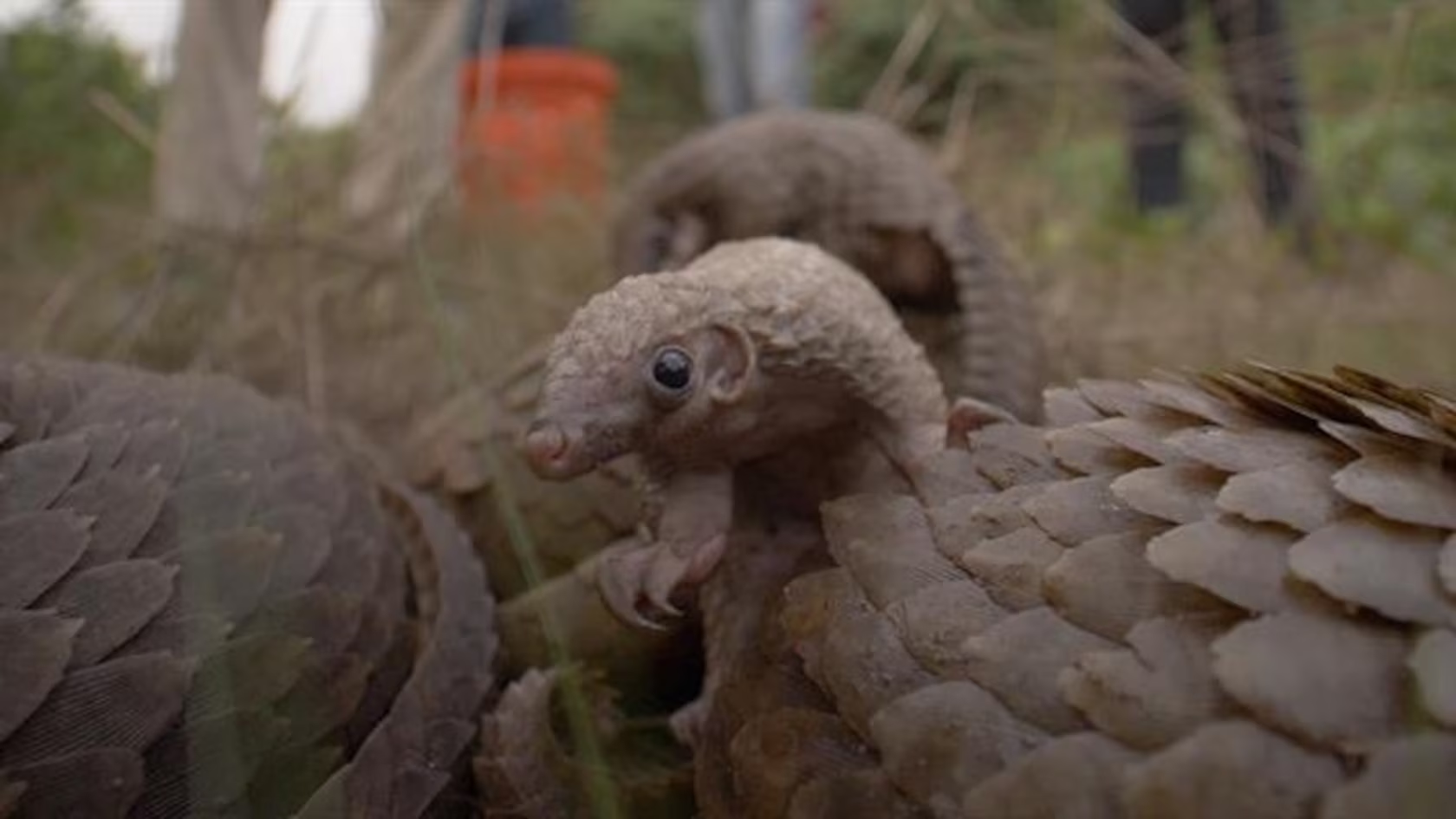
The pangolin passage teas test focuses on a short text about pangolins. These mammals live in Africa and Asia. The passage talks about their looks, habits, and dangers.
Here is a sample passage based on common TEAS content:
“The pangolin is a critically endangered mammal native to Africa and Asia. It has scales that cover its body like armor. People often mistake it for a reptile, but it is a mammal. Pangolins eat ants and termites with long sticky tongues. They curl into a ball to protect themselves from predators. Sadly, humans hunt them for scales and meat. Some believe scales heal illnesses, but no proof exists. This trade makes pangolins the most trafficked animal in the world. Efforts to save them include laws and awareness days like World Pangolin Day in February. It is important to act quickly before the pangolin is lost forever.”
This text is about 150 words. In the test, you read it and answer questions. The passage teaches facts while testing comprehension.
Why does the TEAS use this topic? It links to science and ethics in nursing. Nurses learn about health myths and conservation. Understanding such passages builds critical thinking.
Background on Pangolins
Pangolins are special animals. Eight species exist. Four live in Asia, four in Africa. They range from small to over 70 pounds.
Key facts:
- Scales: Made of keratin, like human nails. Scales make up 20% of body weight.
- Diet: Eat up to 70 million insects a year. Help control pests.
- Habits: Nocturnal. Dig burrows. Swim well.
- Defense: Roll into a ball. Scales deter lions and tigers.
Pangolins face extinction. All species are endangered. Illegal trade is the main threat. In 2024, officials seized over 100 tons of scales. Conservation groups like WWF work to protect them. Laws ban trade, but poachers continue.
Learning about pangolins helps you grasp the passage. Real facts make answers clearer.
Why the Pangolin Passage TEAS Test Matters
The pangolin passage teas test ranks high in searches because students seek help. Sites like Slide Business offer guides that explain it well. They use clear headings and tips. This boosts SEO.
For you, mastering it raises your reading score. High scores mean better chances in nursing school. Practice shows patterns in questions.
Breaking Down the Passage
Let’s look at the sample passage step by step. This helps you see key parts.
- Introduction to the animal: “The pangolin is a critically endangered mammal native to Africa and Asia.” This sets the topic. Note “critically endangered” as a key term.
- Physical description: “It has scales that cover its body like armor. People often mistake it for a reptile, but it is a mammal.” Highlights unique features. Questions may ask about differences.
- Behavior: “Pangolins eat ants and termites with long sticky tongues. They curl into a ball to protect themselves from predators.” Shows habits. Infer how they survive.
- Threats: “Sadly, humans hunt them for scales and meat. Some believe scales heal illnesses, but no proof exists. This trade makes pangolins the most trafficked animal in the world.” Discusses human impact. Main idea often ties here.
- Conservation: “Efforts to save them include laws and awareness days like World Pangolin Day in February. It is important to act quickly before the pangolin is lost forever.” Calls for action. Supports urgency.
Break it like this in your mind during the test. It makes questions easier.
Types of Questions in the Pangolin Passage TEAS Test
Questions vary. Here are common types with examples.
- Main idea: What is the passage mostly about? Answer: The threats to pangolins and need for protection.
- Detail: Where do pangolins live? Answer: Africa and Asia.
- Inference: Why do people hunt pangolins? Answer: For scales and meat, due to false beliefs.
- Summary: Which sentence sums up the passage? Answer: Activists work to save the endangered pangolin from illegal trade.
- Support: Which detail backs the main idea? Answer: Pangolins are the most trafficked animal.
Practice these. Use flashcards from sites like Quizlet.
Sample Questions and Answers
Try these based on the sample passage.
- What is the pangolin’s main defense? a. Running fast b. Curling into a ball c. Climbing trees d. Biting predators Answer: b. Curling into a ball Explanation: The passage says they curl to protect from predators.
- Why are pangolins endangered? a. Natural predators b. Habitat loss only c. Illegal trade for scales and meat d. Climate change Answer: c. Illegal trade for scales and meat Explanation: Hunting is the key threat mentioned.
- What does the passage suggest about scales? a. They have proven medical value b. No evidence of medicinal properties c. Used for food d. Soft and flexible Answer: b. No evidence of medicinal properties Explanation: It states “no proof exists.”
- Which is a conservation effort? a. Hunting more b. World Pangolin Day c. Selling scales d. Ignoring laws Answer: b. World Pangolin Day Explanation: Raises awareness.
- What is the tone of the passage? a. Joyful b. Urgent c. Bored d. Funny Answer: b. Urgent Explanation: It says “act quickly before lost forever.”
Use these to test yourself. Time your answers.
Strategies to Ace the Pangolin Passage TEAS Test
Follow these steps to succeed.
- Read actively: Scan for main ideas first. Then read details.
- Note key facts: Underline animal traits, threats, and solutions in your mind.
- Eliminate wrong answers: Cross out choices that don’t match the text.
- Infer carefully: Use only passage info, not outside knowledge.
- Practice daily: Read science articles on animals. Time yourself.
These strategies work for all reading passages. Stay calm during the test.
Common Mistakes to Avoid
Students often err in these ways:
- Rushing: Read too fast and miss details. Take time.
- Assuming: Add facts not in the passage. Stick to text.
- Ignoring tone: Miss urgency in conservation parts. Note words like “sadly” or “important.”
- Poor time management: Spend too long on one question. Move on and return.
- No practice: Skip mock tests. Do at least one weekly.
Avoid these to boost your score.
Tips for TEAS Preparation
Build skills with these tips:
- Read widely: Books on nature, like about endangered species.
- Use resources: Check pangolin passage teas test for more help.
- Join groups: Online forums for TEAS prep. Share tips.
- Rest well: Sleep before the test. Eat healthy.
- Review errors: Learn from practice mistakes.
For pangolin info, see this pangolin passage PDF. Or read TEAS pangolin guide. Another source is this exam paper with pangolin text.
How Pangolins Relate to Nursing
Nursing involves health education. Pangolin myths about scales teach about evidence-based care. Nurses fight false beliefs in medicine. Conservation links to public health. Diseases from wildlife trade affect humans. TEAS tests this awareness.
Stats show: Wildlife trade spreads viruses. In 2020, it linked to pandemics. Nurses need broad knowledge.
Advanced Strategies for Reading Comprehension
Go deeper with these:
- Vocabulary building: Learn words like “trafficked,” “endangered,” “keratin.”
- Paragraph mapping: Assign roles to each paragraph: intro, body, conclusion.
- Question prediction: After reading, guess questions. Then check.
- Group study: Discuss passages with friends. Hear new views.
- Apps and tools: Use TEAS apps for daily practice.
Apply these for better results.
Practice with Similar Passages
Try this extra passage:
“The armadillo looks like the pangolin but lives in Americas. It has bony plates for protection. Armadillos eat insects too. Some carry leprosy, a disease. Conservation helps them.”
Questions:
- How is the armadillo like the pangolin? Answer: Both have armor and eat insects.
- What risk do armadillos pose? Answer: Carry leprosy.
Use this to practice. Find more online.
Pangolin Conservation Efforts
Groups act to save pangolins. CITES bans international trade since 2017. World Pangolin Day educates people. In Africa, rangers patrol forests. In Asia, laws fine poachers.
You can help: Support WWF. Avoid products with scales. Spread facts.
This ties back to the passage’s message.
TEAS Test Day Tips
On test day:
- Arrive early: Settle in.
- Bring ID: Follow rules.
- Stay focused: Breathe deep.
- Pace yourself: Watch time.
- Review answers: If time allows.
Feel reassured: Prep pays off.
FAQs About the Pangolin Passage TEAS Test
What is the main focus of the pangolin passage teas test? It tests reading skills on animal facts and threats.
How many questions on the pangolin passage? Usually 5-7, depending on version.
Where can I find practice? Quizlet and ATI sites.
Why pangolins in TEAS? To teach comprehension on real issues.
Can I retake TEAS? Yes, after wait periods.
Conclusion
The pangolin passage teas test challenges but rewards prep. You learned the passage, questions, strategies, and pangolin facts. Use tips to ace it. High scores lead to nursing success. Remember, practice builds confidence. What part of the TEAS do you find hardest? Share in comments to help others.
References
- Slide Business. “The Pangolin Passage Teas Test – Everything You Should Know.” Accessed February 17, 2026.
- Quizlet. “TEAS Reading Review Flashcards.” Accessed February 17, 2026.
- Scribd. “FORM-5-MID-YEAR-EXAM-PAPER1-2022.” Accessed February 17, 2026.
- CITES. “Convention on International Trade in Endangered Species.” Published 1999. Accessed February 17, 2026.
Target audience: Aspiring nursing students aged 18-30, high school grads or career changers seeking TEAS prep. They want simple, actionable advice to pass exams and enter healthcare.
Secondary Keywords: teas pangolin reading, pangolin teas questions, teas test pangolin guide. LSI Semantic Keywords: endangered mammals, reading comprehension strategies, nursing entrance test, wildlife conservation. Long Tail Keywords: how to prepare for pangolin passage in teas test, answers to pangolin teas reading questions, tips for mastering teas pangolin passage.